Neurological Disorders 

There are over 400 neurological disorders, affecting over three billion people from all backgrounds and ages. They are the leading cause of disability and the second leading cause of death globally, yet they’ve received relatively little attention as an NCD group – until recently.

Key facts

Massive human toll 

43% of the global population are living with a neurological disorder, such as autism, learning disorders, dementia or stroke. They are widespread among both children and adults.

An abysmal care gap

Disparity is vast when it comes to care for neurological disorders. High-income countries have up to 70 times more neurologists per 100,000 people than low- and middle-income countries. 

An increasing burden 

WIth an aging population and increasing exposure to risk factors like air pollution, health systems need to prepare for a tidal wave of neurological disorders. Dementia alone is cause for concern. There are 55 million people living with the disease, and this number will double every 20 years.
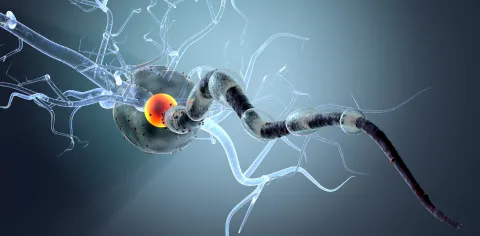
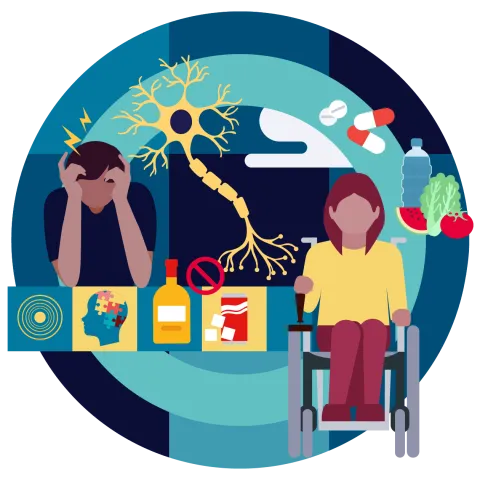
neurological conditions illustration

What are neurological disorders? 

Neurological disorders affect close to half of all people on the planet – 43%. Most neurological disorders are noncommunicable, and the long list includes some big names – stroke, Alzheimer’s disease, Parkinson’s disease, epilepsy, attention deficit disorders, and autism spectrum disorders, to name a few. Yet neurological disorders have been widely overlooked and misunderstood as a disease group. Only recently have they been explicitly included as a priority in the NCD agenda, with the Political Declaration of the third UN High-Level Meeting on NCDs in 2018. And they are often included within mental health, despite clear and important differences that require separate approaches. 

The sheer scale of the neurological burden can no longer be ignored – it threatens health systems as the global population ages, and affects a large number of children and youth as well as adults. It is the leading cause of disability in the world and the second leading cause of death. It is time that neurological disorders get the attention they deserve.

Why is it urgent to act?
Neurological disorders place an immense and inequitable burden on health systems, economies, society and households, and the burden is increasing at an alarming speed.

Neurological disorders are frequently excluded from health benefit packages, particularly in LICs, leaving billions of people across the world to pay out-of-pocket for their medicines and treatment. Those who cannot pay simply go untreated.

Stigma associated with neurological disorders is common, with deep and far-reaching effects. For example, children with epilepsy in LMICs are less likely to attend school, while adults face employment barriers. In many countries, stigma is also linked to beliefs of contagion, blame and witchcraft.

An ageing population means that health systems need to get ready for a tidal wave of neurological disorders. The dementia burden alone is projected to nearly triple by 2050. Much of the increase will be in developing countries, where health systems are least prepared.

There is a stark difference between the number of people who need treatment for a neurological condition and those who receive it. This care gap reaches at least 90% in some LMICs, and even in HICs neurological conditions are under-treated.

Health systems in high-income countries are far better equipped to manage neurological disorders than those in LMICs. They have up to 70 times more neurological professionals per 100,000 people than LMICs, and most developing countries have little or no availability of medicines for neurological disorders like epilepsy and stroke.

Poverty is a risk factor for the development of neurological disorders, for both children and adults. This is due to many diverse reasons, ranging from higher exposure to air pollution, to nutritional deficiencies, to higher rates of substance abuse. 

Common neurological disorders
Neurological disorders are disorders that affect the brain, the nerves found throughout the body, and the spinal cord. While there are several prevalent brain infections like meningitis or encephalitis, the majority of neurological disorders are noncommunicable. These are a few of the most common ones:

A stroke occurs when a blood vessel that carries oxygen and nutrients to the brain is either blocked by a clot or ruptures. It is considered both a cardiovascular disease and a neurological disorder, as it affects both body systems. A stroke can cause lasting brain damage and long-term disability, and takes the lives of six million people each year. 

Dementia is a degenerative brain syndrome that negatively affects memory, behaviour, emotional processing and control, and cognition. There are multiple forms of dementia, with Alzheimer’s disease being the most common. There are currently 55 million people living with dementia worldwide, with close to 10 million new cases every year. This number will increase to an estimated 75 million in 2030, and 139 million in 2050.

The main symptom of migraine disorder is intense headache, usually with throbbing in one particular area. Nausea and sensitivity to light and sound are also common symptoms. The prevalence of migraine is more than 10% worldwide, making it one of the most common neurological disorders.

Epilepsy is a brain disease in which clusters of nerve cells signal abnormally, causing a seizure. More than 50 million people have epilepsy worldwide, yet the disease is widely misunderstood or misdiagnosed. It is severely stigmatised in many countries of the world.

This group of conditions includes attention deficit disorders, hyperactivity, autism spectrum disorders, learning disorders, and many more. They tend to present in childhood but can appear in adolescence or adulthood. They account for almost a fifth of the total neurological burden worldwide, equivalent to 80 million years of healthy life lost in 2021.

Risk factors
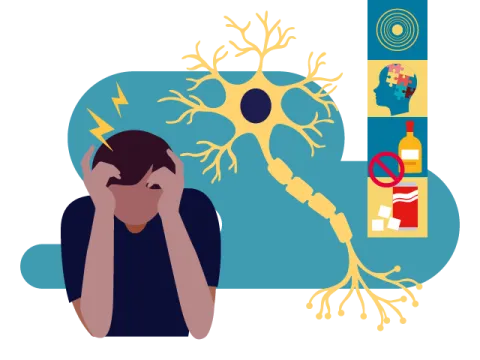
Some neurological conditions come down to uncontrollable factors like genetics, but many others can be prevented or delayed. 90% of strokes, 40% of dementia cases, and 30% of epilepsies are preventable by limiting or eliminating exposure to modifiable risk factors and air pollution.
Getting ready: the incoming burden of neurological conditions
Neurological conditions pose a significant threat to health systems, economies, and societies due to rising prevalence. Many can be prevented, but health systems must prepare for those that cannot.

Cost prevents many people living with a neurological disorder from even getting a diagnosis, much less treatment. Improving the affordability of care for neurological disorders through lower costs and inclusion in health benefit packages is essential for reducing disability and premature death, and improving quality of life, for those with neurological disorders.

Lack of availability of medicines for neurological disorders is a major barrier to access across world regions, with disparities within countries, between urban and rural areas, and across public and private sectors. The lack of essential medicines for epilepsy, Parkinson's disease and other neurological disorders widens an abysmal neurological care gap in LMICs, particularly in Africa and South-East Asia.

Stigma is a widely recognised public health issue, and many people with neurological disorders and their families experience stigmatisation, adding to their burden of illness. This comes from communities as well as health systems, and awareness raising, education and sensitisation is required in both settings in countries around the world.

Managing the neurological disorder burden must begin with community-based primary care clinics and a workforce that is trained to identify such conditions. The specialised neurological workforce must also be strengthened and increased, especially in LMICs and in rural areas in all countries.

Opciones para compartir: