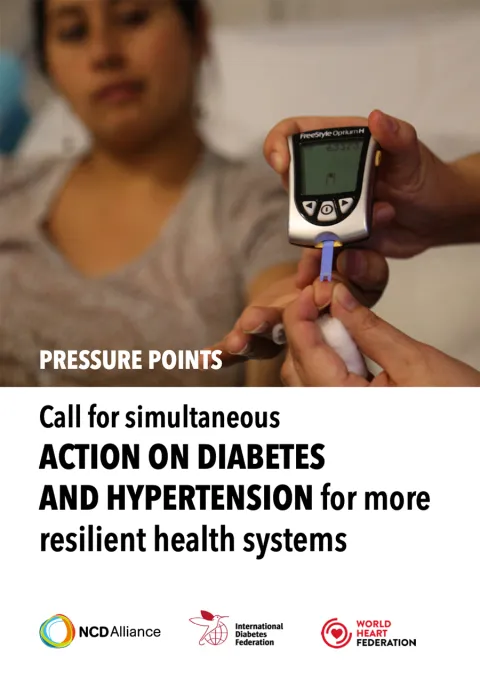
Tackling diabetes through access to care in Tanzania

Tanzania is experiencing one of Africa’s worst type 2 diabetes epidemics. In 2011, 2.8% of Tanzanians had diabetes; by 2021, this figure had risen to 12.8%. See how the government is taking action to both improve access to treatment and help people to eat healthier and exercise more in order to prevent type 2 diabetes.
About the diabetes epidemic
Diabetes is a chronic disease that occurs when the pancreas is no longer able to make insulin, or when the body cannot make good use of the insulin it produces.
Around one in ten people now live with diabetes around the world. This number is predicted to rise from 537 million adults today to 643 million and 784 million adults by 2030 and 2045. The large majority of this increase will take place in low- and middle-income countries, where most diabetes deaths are taking place as well.
There is no biological reason for this - a person’s chances of surviving diabetes comes largely down to socio-economic factors: being able to afford a healthy diet, having access to diagnosis and care, and adhere to treatment plans. This is often much easier said than done. Although insulin was developed 100 years ago, half of the people who need this life-saving medicine do not have access to it.
This challenge is more severe in low- and middle-income countries:
- In Africa, 86% of people with type 2 diabetes are unable to access the insulin they need.
- 63% of households in low-income countries are unable to afford insulin, compared with 2.8% of households in high-income countries.
- 26.9% of households in low-income countries cannot afford the diabetes medication Metformin, compared to 0.7% of households in high-income countries.
Even within high-income countries, poor communities have higher rates of type 2 diabetes. It is KEY that all national essential healthcare packages include diabetes treatment to avoid pushing the poor further into poverty by being forced to pay medical expenses out-of-pocket.
Governments can also help lower the prevalence of type 2 diabetes in their countries by implementing policies that support people in eating a healthy diet, reducing sugar consumption, and getting plenty of physical activity. Policies like these are an investment, not an expense, since diabetes-related health costs are now estimated to account for 11.5% of the total global healthcare budget. Prevention is far more cost-effective than treatment!